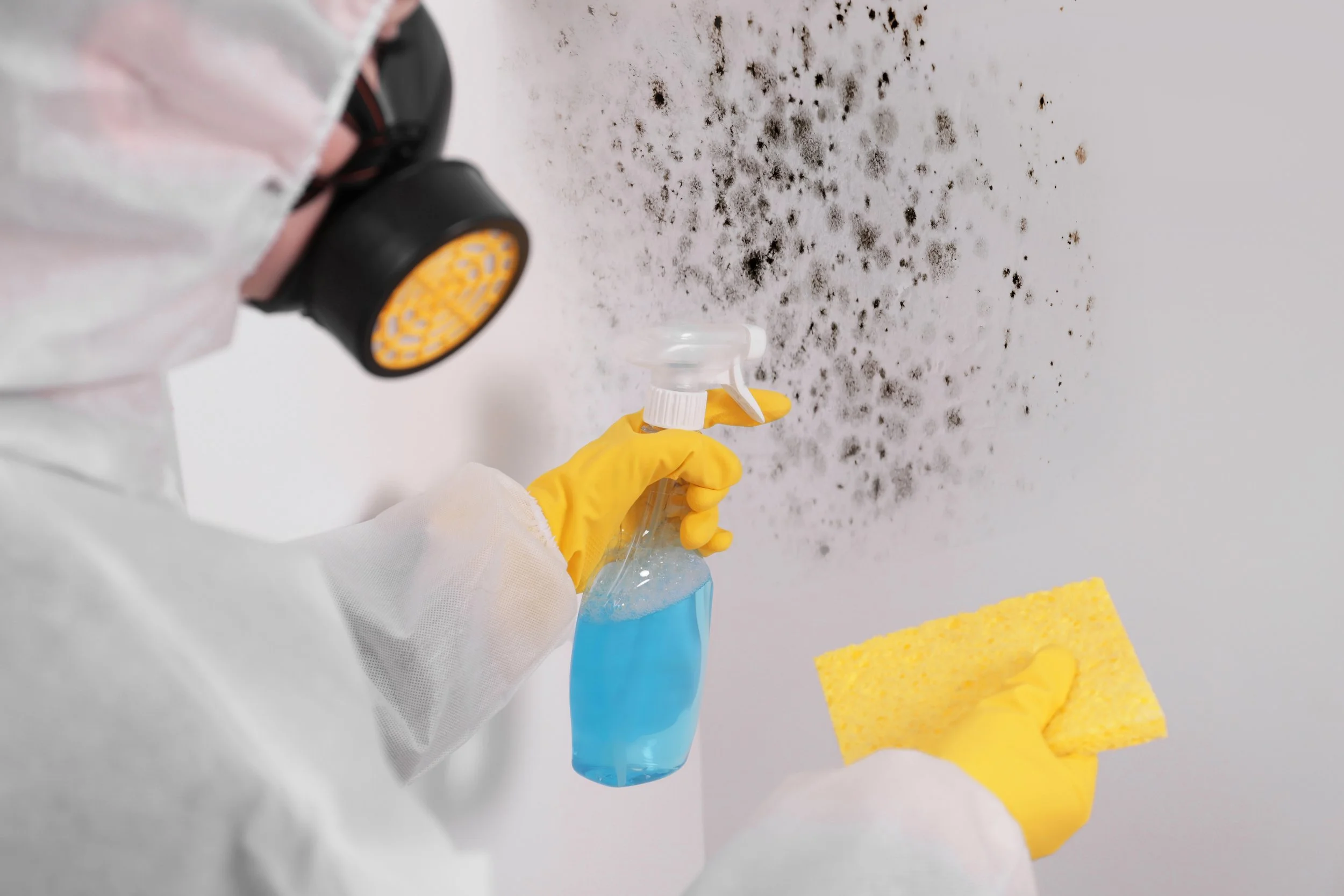
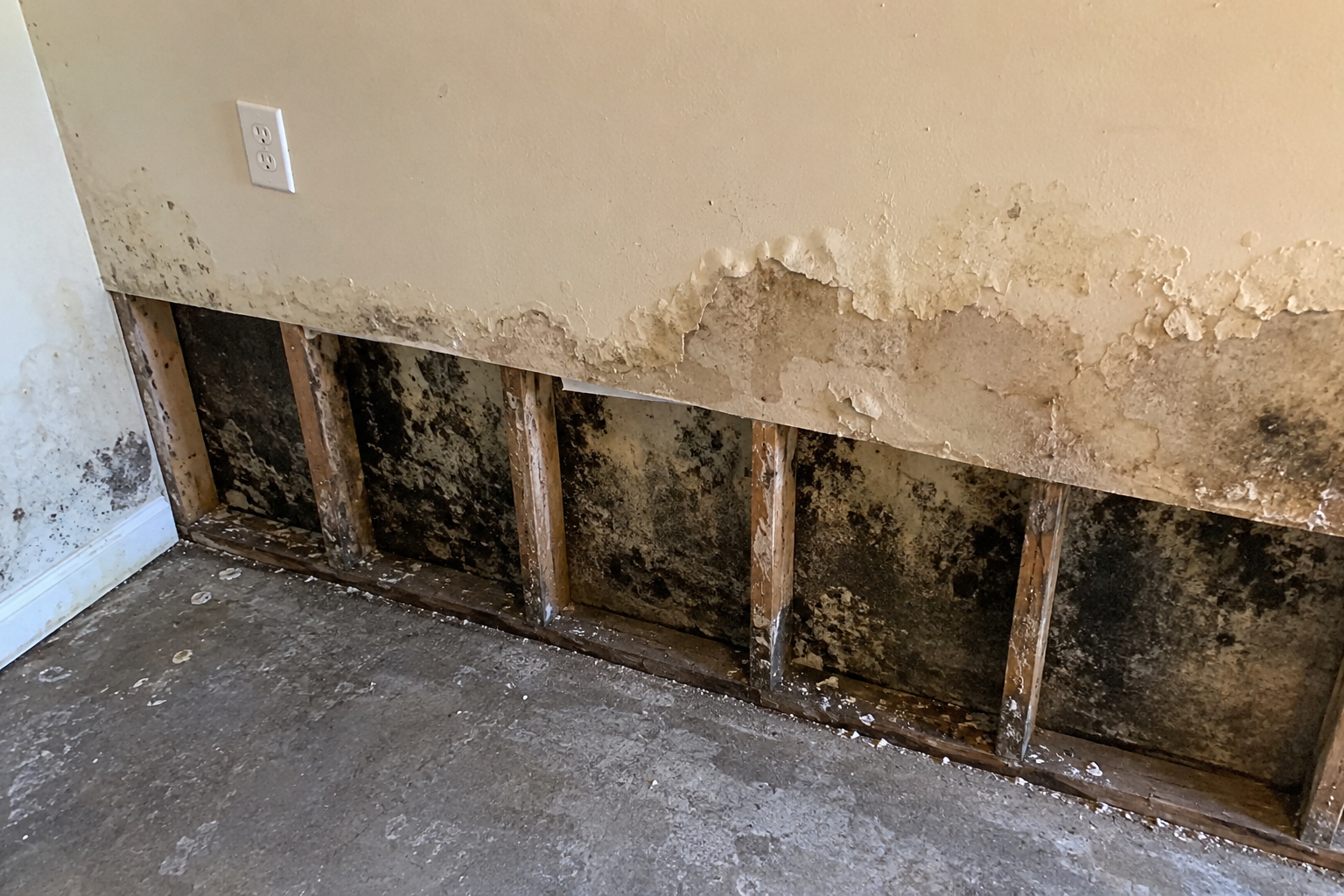
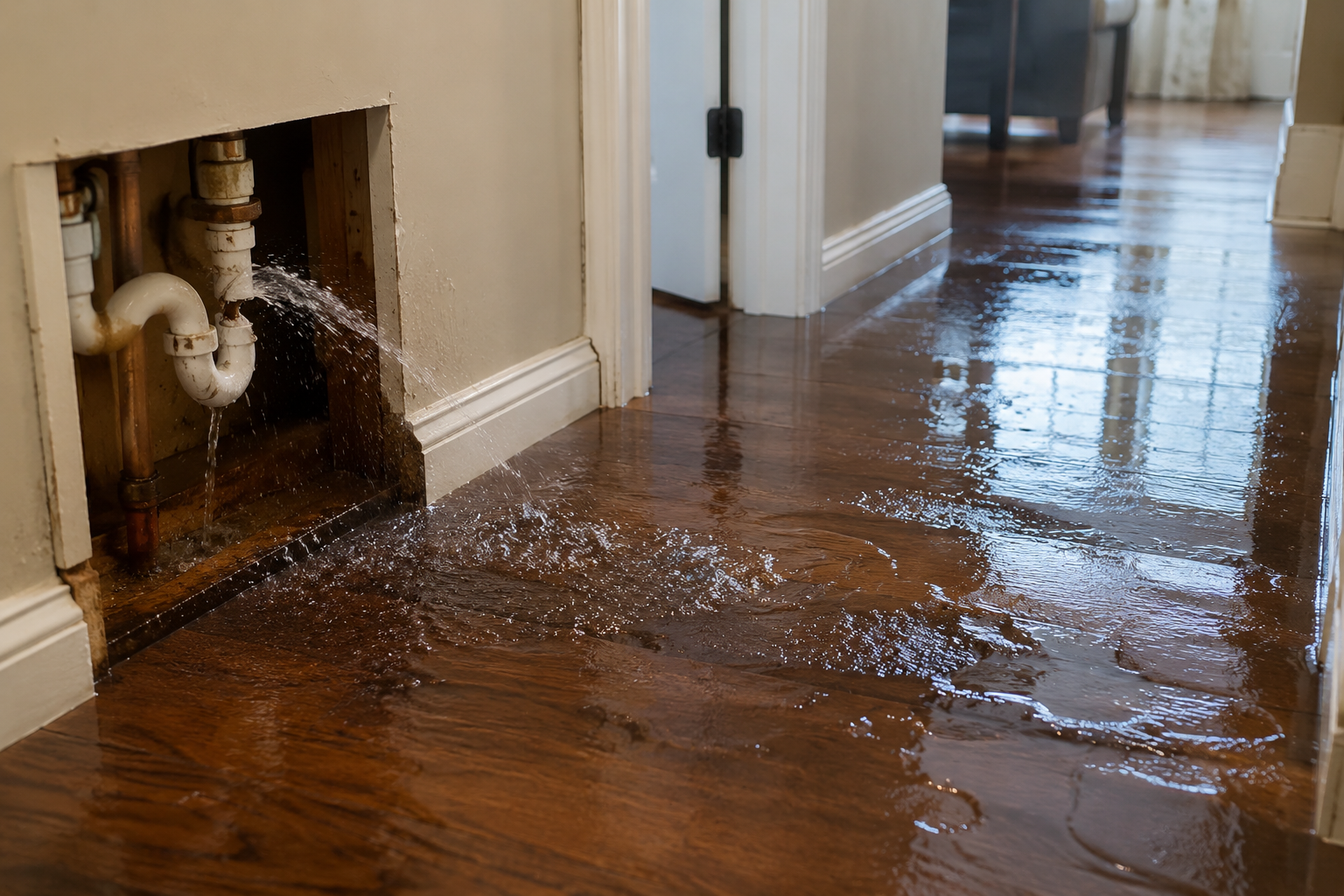
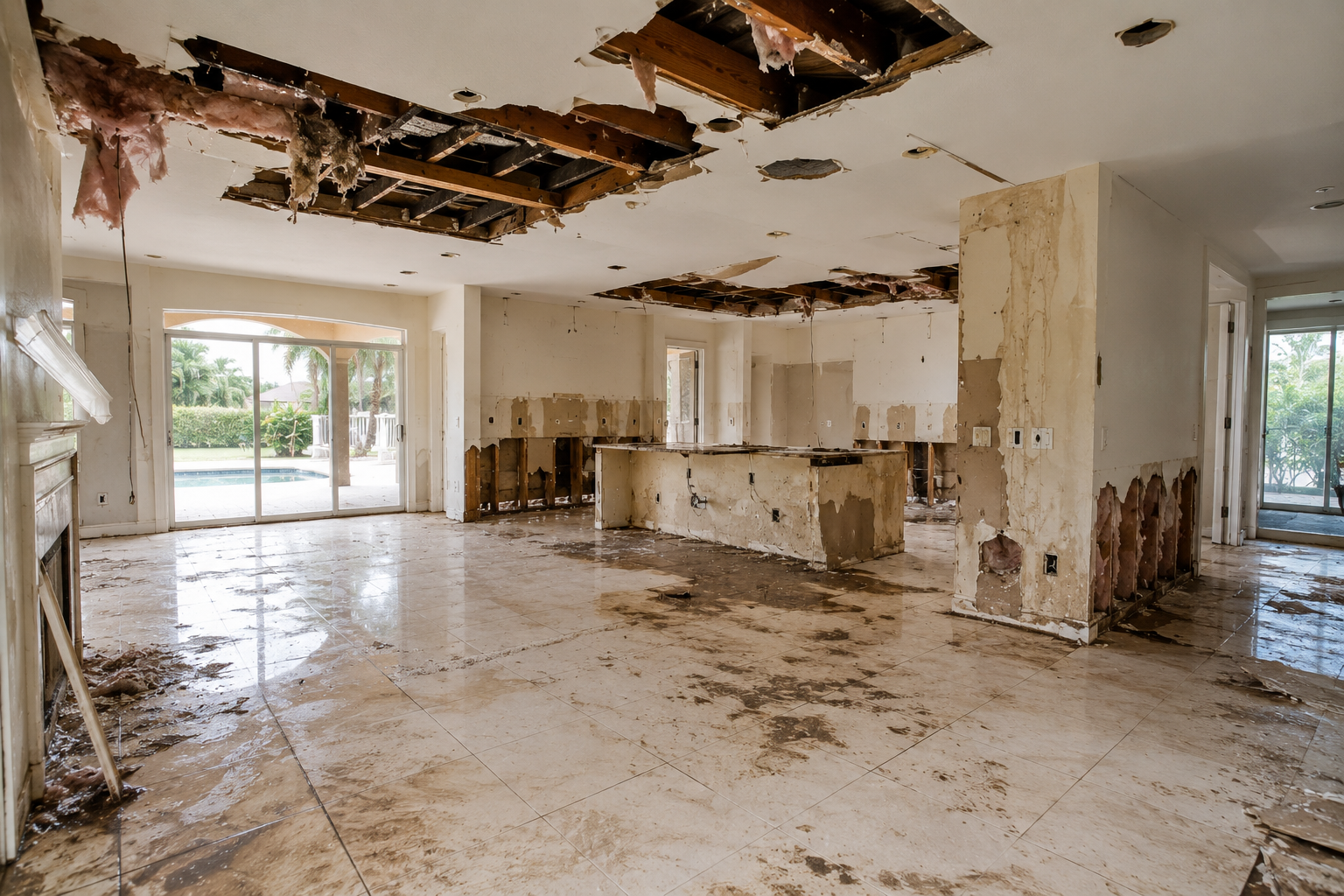
The homeowner contacted Vanguard Environmental and Restoration after noticing water staining, deteriorating drywall, damaged flooring, and areas where walls felt soft to the touch. These warning signs had been worsening gradually, suggesting moisture had been affecting the structure for a significant period of time.
The visible damage was concerning enough on its own. But as the inspection progressed, it became clear that what was visible represented only a fraction of the actual problem. This wasn't a surface-level repair. It was a structural reconstruction waiting to be uncovered.
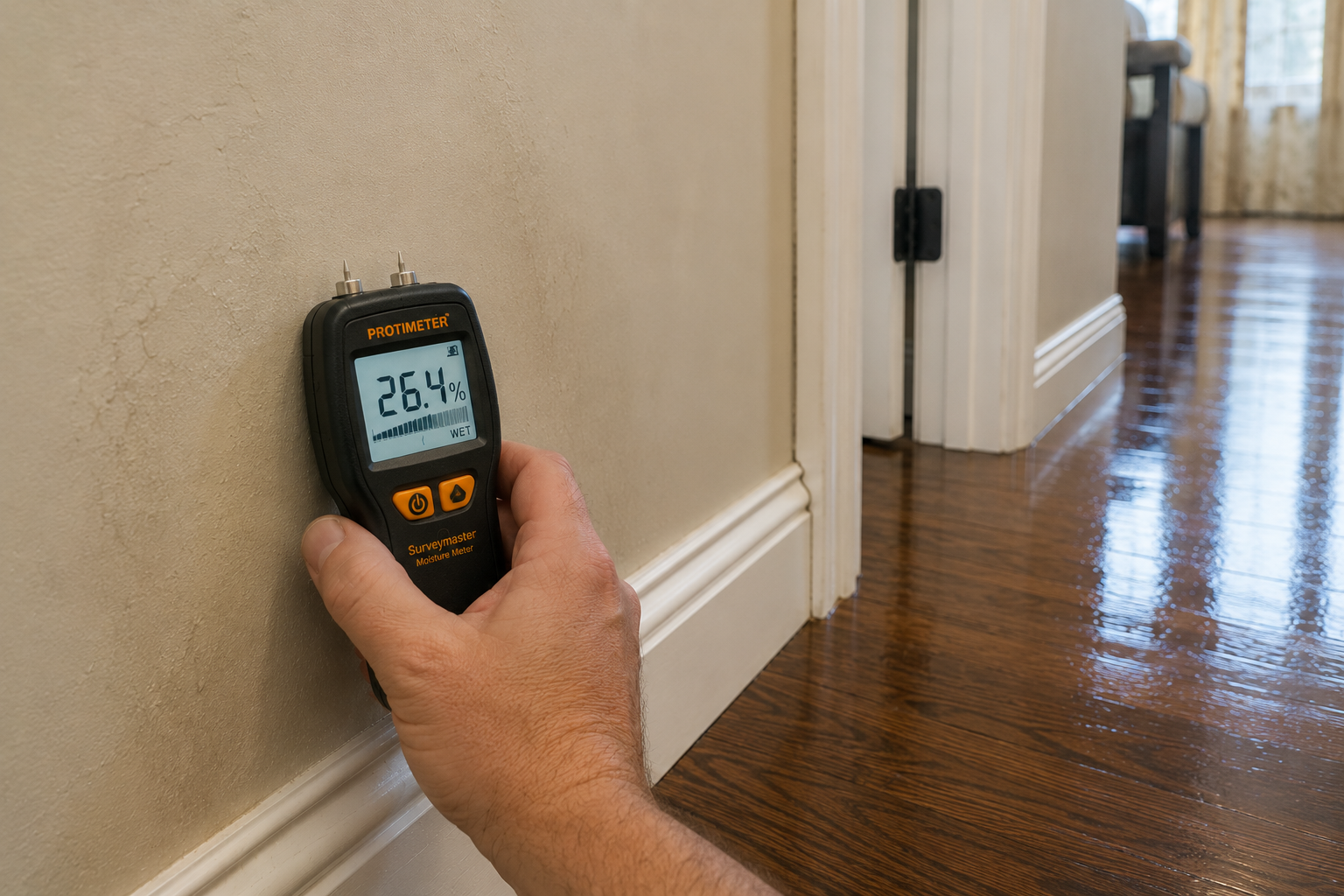
Using thermal imaging, professional moisture meters, and a systematic inspection of every accessible area, Vanguard's team built a complete moisture map of the property. The results revealed water intrusion throughout structural assemblies that would never have been found through visual inspection alone. Elevated moisture was detected inside wall cavities in rooms that appeared completely normal, beneath flooring systems that showed no surface-level staining, and within framing members that were actively losing their structural integrity.
This is the reality of structural water damage: by the time you can see it on the surface, the materials behind the surface have been compromised for weeks or months. The moisture map became the roadmap for every decision that followed.
Why this matters: Repairing only the visible damage in a situation like this would have been the worst possible decision. The underlying structural compromise would have continued deteriorating behind the new finishes, eventually requiring an even more extensive and expensive reconstruction. Professional assessment prevented that outcome.
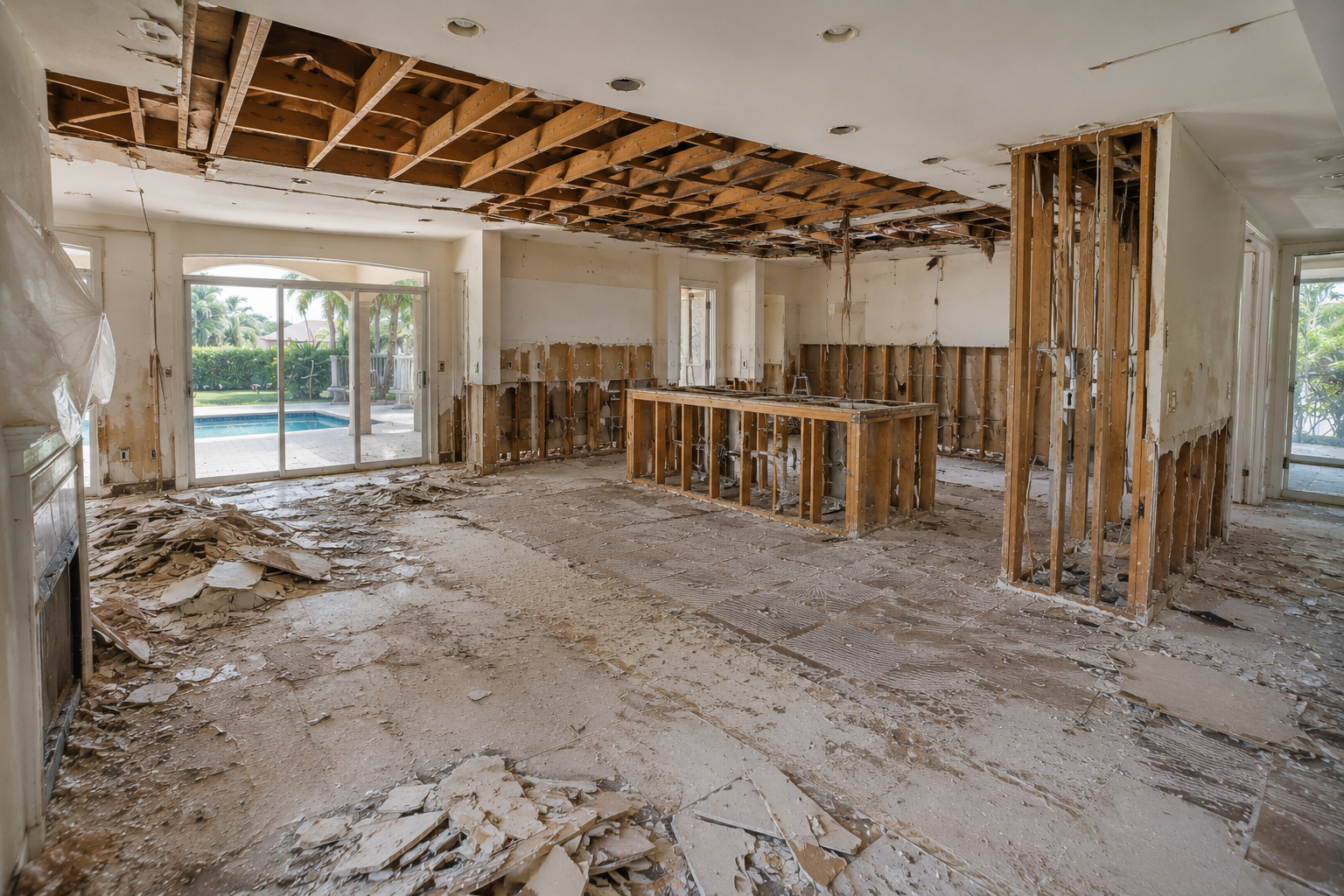
With the moisture map as the guide, Vanguard's team began controlled demolition of every compromised material. Drywall that had absorbed moisture beyond the point of recovery was removed to expose the structural framing behind it. Insulation that had been saturated and was now harboring moisture and potential microbial growth was stripped out. Subfloor sections that had lost structural integrity were carefully taken up. Baseboards, trim, and interior finishes in the affected zones were removed.
Controlled demolition in a reconstruction project isn't destruction. It's precision. The goal is to remove everything that has been compromised while preserving everything that can be saved. Every cut, every removal decision, was guided by the moisture data collected during the assessment phase.
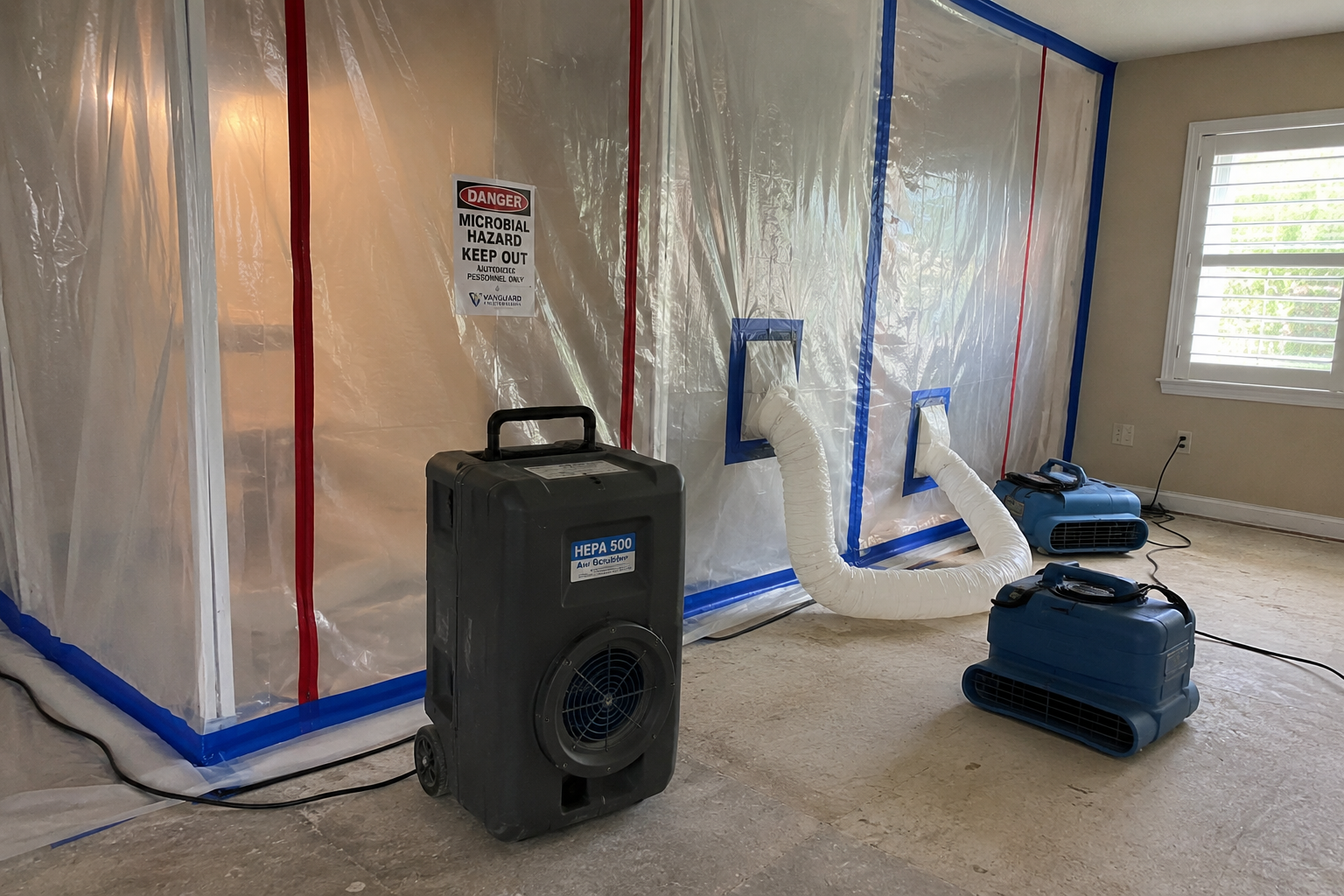
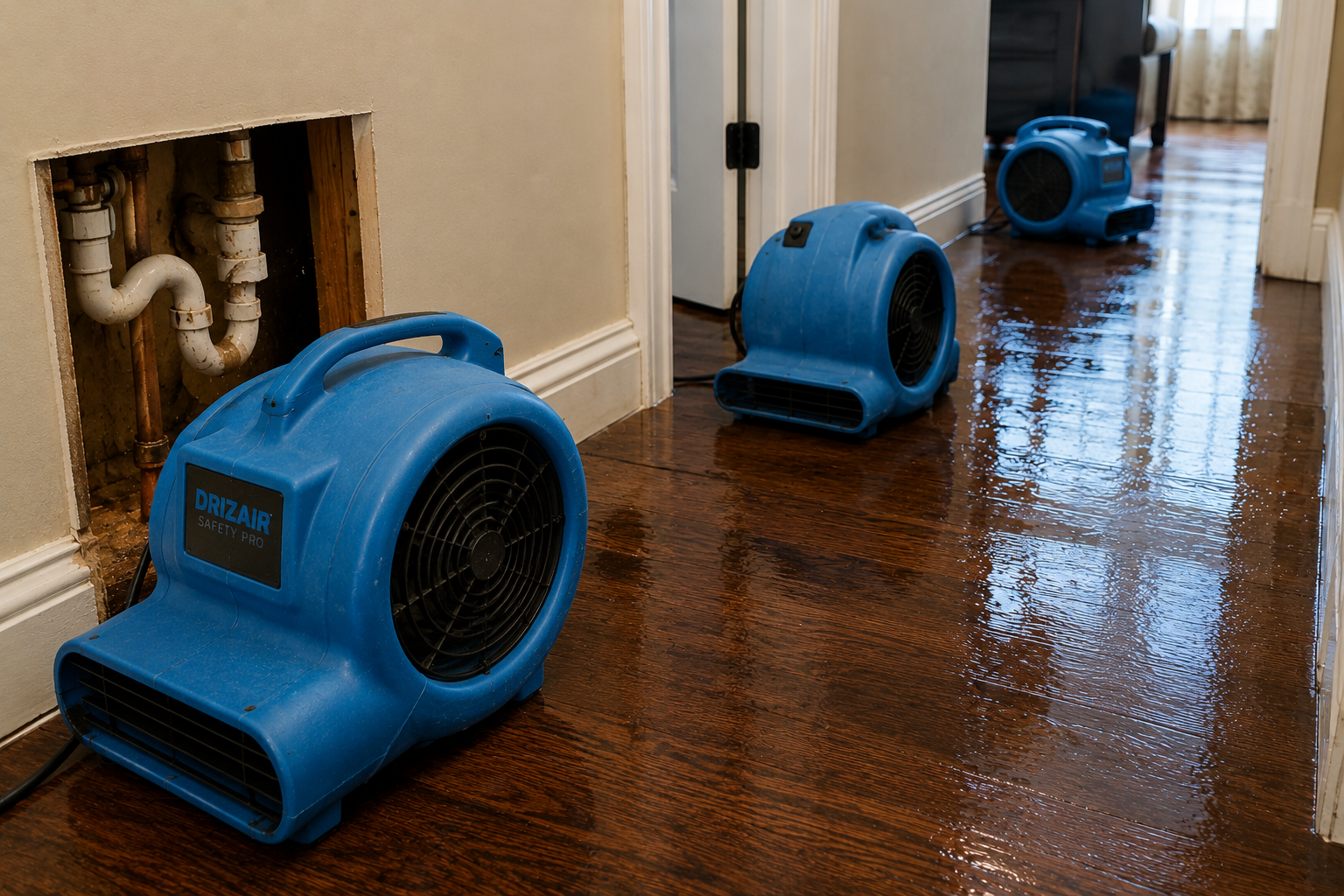
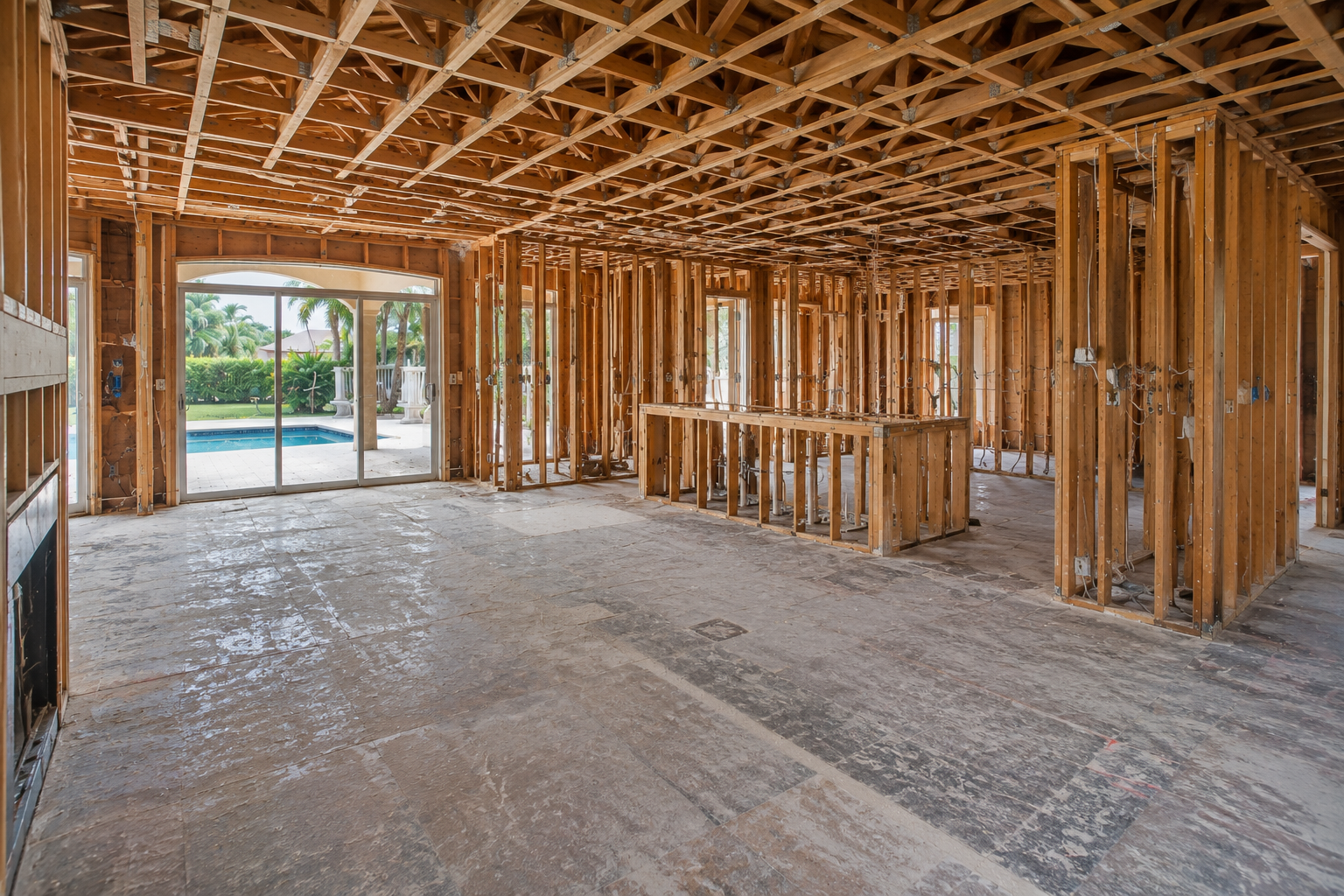
With the compromised materials removed and the structural framing now exposed, industrial drying equipment was deployed throughout the affected areas. This is the phase where structural drying becomes fundamentally different from surface drying. With walls opened up and subfloor sections removed, the drying equipment had direct access to the structural members themselves: the studs, the joists, the sill plates, the sheathing. Every component that would serve as the foundation for the reconstruction needed to be verified dry before a single piece of new material went in.
Daily moisture readings tracked the progress across dozens of monitoring points. The drying continued until every reading returned to acceptable levels, verified and documented. Only then did the team clear the structure for reconstruction.
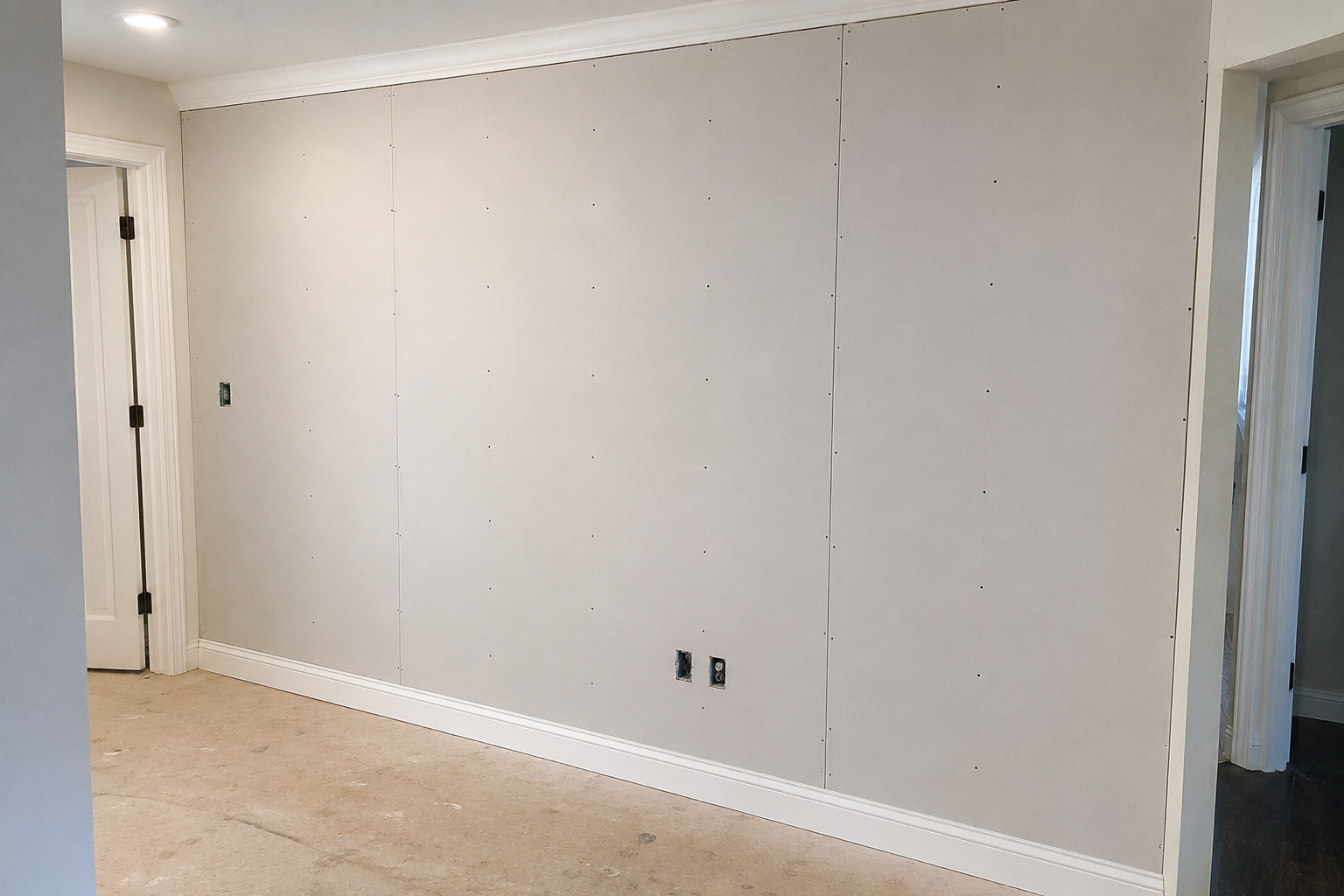
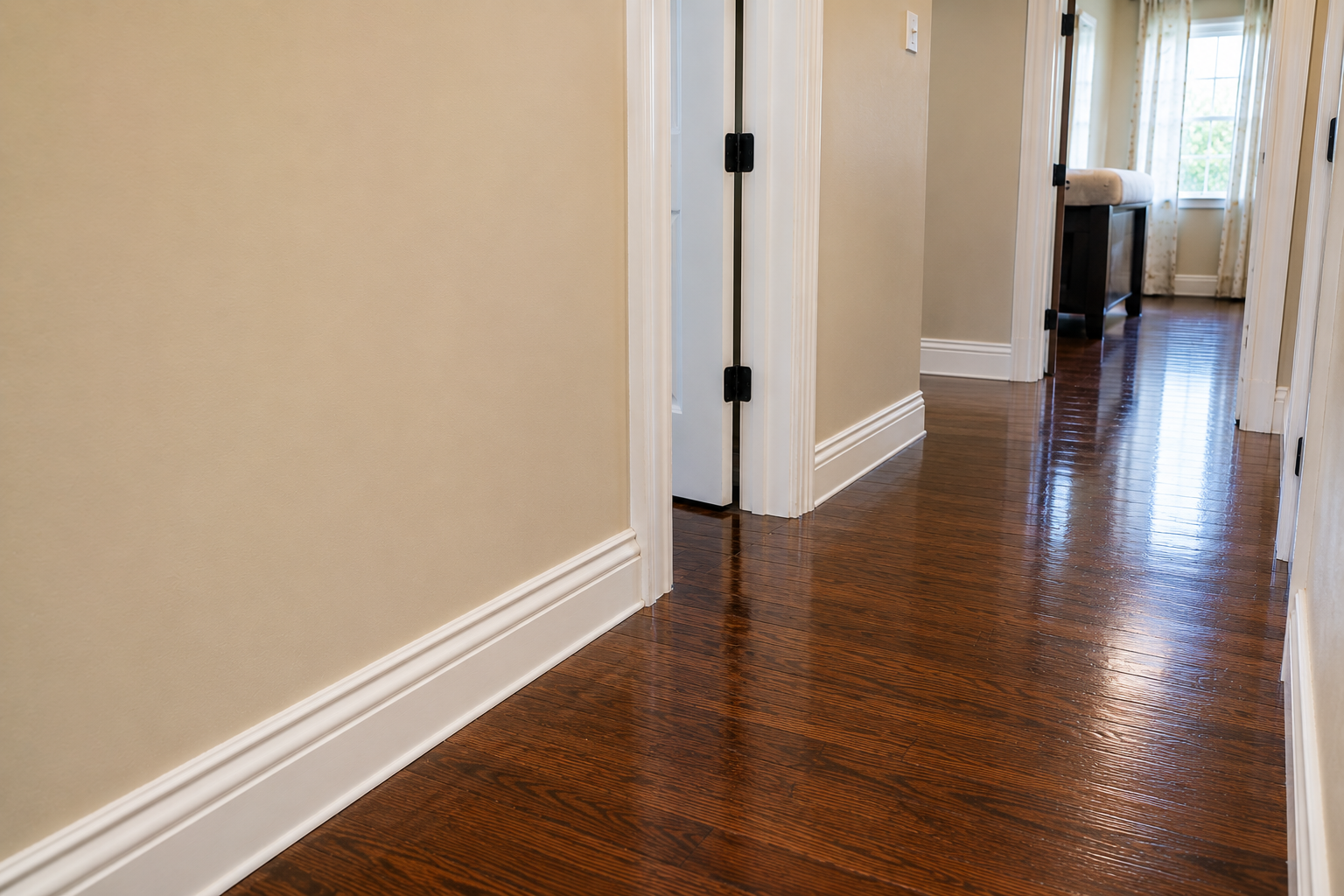
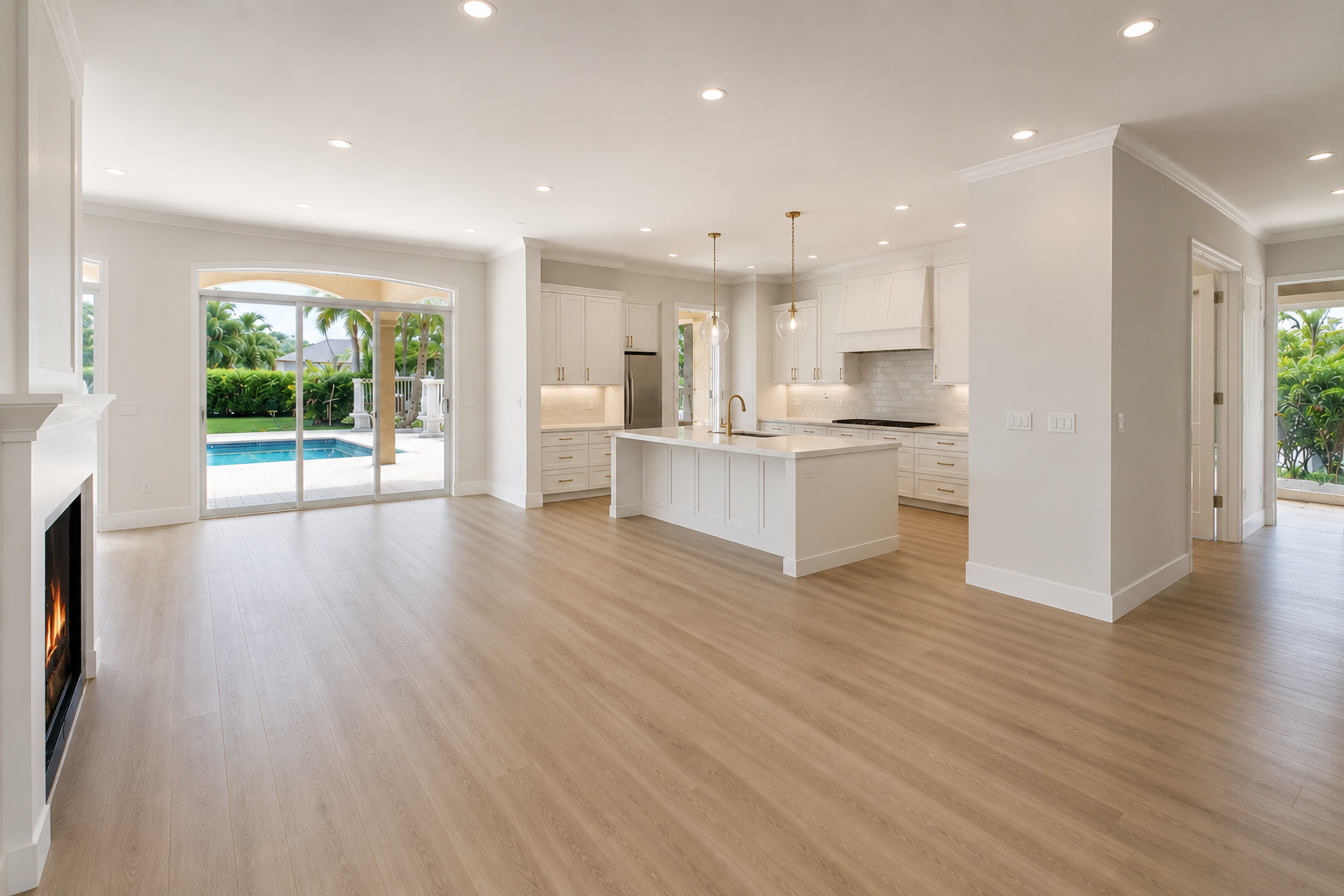
With a verified dry structure, Vanguard's reconstruction team built the home back from the framing out. New insulation was installed. New drywall went up, was taped, mudded, and finished. Texture was matched to the existing surfaces in unaffected areas so the transition would be invisible. Subfloor sections were replaced with structural-grade materials. New flooring was installed. Baseboards, trim, and molding were cut, fitted, and painted. Every wall was painted to match the existing color scheme throughout the home.
The reconstruction was systematic. Framing repairs first, then insulation, then drywall, then finishing work. Each phase was completed before the next began. The same team that performed the demolition and drying was the same team that hung the drywall and painted the final coat.